
Goths Against Cancel Culture - A Talk with Danielle Astraea of Crucifera
"Veteran goths fought to escape cancel culture, and we can’t let ourselves get pushed back."

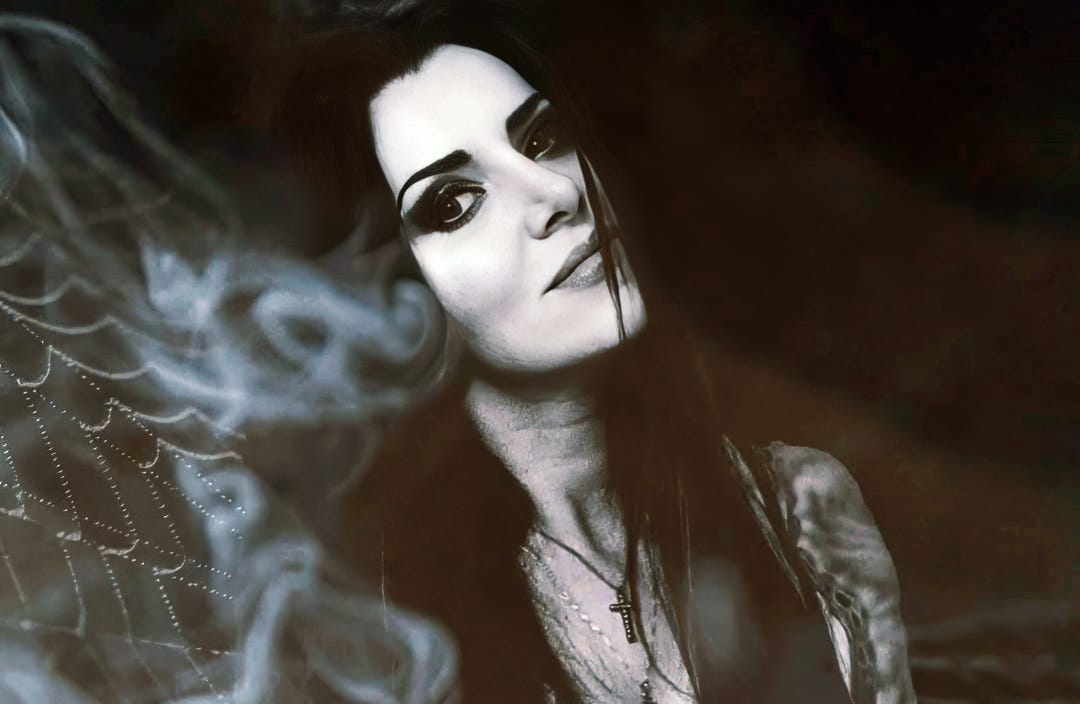
Goth has been all over the news and the feed recently, but people who work at these legacy publications don’t seem to know anyone in the goth subculture. As someone who was involved in my earlier years, I kept in touch with people in goth scene and booked a few of their musical artists for my gallery opening last year.
What many people don’t know, especially when they work in tech and/or politics and are therefore removed from anything truly alternative, is that musicians in the goth scene are now fighting cancel culture and producing albums about it. There’s a group called Goths Against Cancel Culture on FB that has been rapidly growing, now with almost 50K members.
Goths are done being told what they can and cannot say by liberal hall monitors. They’re sick of pretending to be woke, and carrying the torch of the real counterculture by fighting against the petty cliques in their scene who want to restrict their freedom of speech, association, and expression. I had a talk with Danielle Astraea, the force behind the musical project Crucifera and creator of Goths Against Cancel Culture to find out what was happening.
This interview serves to bring readers of The Cultural Futurist into their world.
Track is Black Tongues by Crucifera. It’s a battle cry against cancel culture and call for truth and restoration in the scene.
Rachel Haywire:
Hey Danielle. It’s a pleasure to catch up with you. There’s been a lot of media noise about goth recently, yet very few people seem to understand what goth is about. They think it’s just fetish girls in graveyards listening to The Cure. As someone who has real skin in the game with your gothic musical project Crucifera, how would you describe goth to the uninitiated? What are some important bands for people to get into? What’s the vibe like at a goth club? Tell us about the fashion.
Danielle Astraea:
It’s great to speak with you too, Rachel! To anyone curious about what goth is, I’d say it’s fundamentally about the music. If you want to get into trad-goth, start with old Christian Death. You should also listen to Bauhaus, Clan of Xymox, Siouxsie & the Banshees, and Sisters of Mercy. Into the 90s, I have to mention Switchblade Symphony. There’s a lot of history regarding who actually coined “gothic.” When I was younger I thought it was Siouxsie, but I did a deep dive and learned that critics used it for The Doors in ‘67 and Sabbath in ‘75. This was long before the post-punk era. Despite the over-complication of subgenres, all these acts share the same gothic DNA at their core.
Beyond the music, goth is about resonance. There’s a shared sense of disconnection from a flawed material world. It isn’t a cult or an ideological purity test. We’re the rebels, weirdos, and outsiders who see reality as a cheap knock-off of the real thing. Goth is a sanctuary for those who feel this divide.
The vibe at a goth club should be a place of radical inclusion, but newcomers have abused the scene by succumbing to divisive identity politics. We were all awkward kids once, and the older generation didn’t judge us for our first attempts at darkness. They handed us a mixtape and let us dance. There’s no need to dictate who is or isn’t “goth” by ideological criteria. I was adopted by my Gen X friends early on and society ostracized us, but we chose to be part of the scene anyway.
Fashion is actually the least important part of goth. Still, I maintain my penchant for it. My preferences have evolved toward designers like AllSaints, Alexander McQueen, and Versace. Style is an exoskeleton. While it’s a form of creativity and expression, it’s also the armor we build to protect and express the weird things inside us in a world that demands conformity. Now, I feel more rebellious if I wear jeans or natural hair to a festival because everyone goes for the alternative look. Sometimes I look at my tattooed body and realize I accidentally adopted what became the modern uniform.
RH:
Let’s talk Crucifera. What was the origin of the name for your musical project, and what were your influences and inspirations? What are the themes that encompass it?
DA:
The name Crucifera refers to the spider Neoscona Crucifera, specifically the orb-weaver. When my husband and I moved into our home in 2021, I befriended a beautiful orb weaver who lived on our porch. She would catch all the mosquitoes for me. I’ve always loved bugs. As a kid I collected them, and as an adult I could never bring myself to kill one. I remember trying that trick where kids squish lightning bugs to leave bioluminescent streaks on the sidewalk, and it made me feel awful. I’ve had three pet tarantulas, the first of which I DIY-taxidermied after she passed.
To me, spiders are like mini land octopuses. They operate purely on instinct, feeling the earth’s vibrations, just wanting to exist and be left alone. A spider doesn’t see the world the way most humans do. It feels it via vibrations from the web it creates and through the ground. That’s how I experience reality. I’m a chronic existentialist, and my music is about navigating the heavy chaos of past traumas, grief, and abuse, weaving those violent frequencies into a silver-lined web.
Musically, everything starts organically. I’ve heard symphonies in my head and dreams since I was a baby. Every track begins on my piano or nylon acoustic guitar using paper and pencil. Once I capture that raw emotion, I move into Cakewalk. My music is the internal symphony in my brain.
RH:
Recently you’ve become notorious for starting Goths Against Cancel Culture, a group of artists, musicians, DJs, and cultural architects that is almost at 50K members. There was a recent appearance on Tim Pool’s show where Brian Graupner of The Gothsicles and now Gasoline Invertebrate spoke with anti-cancel culture goth YouTube personality Jake Munro. It was hilarious to see Milo Yiannoplous involved. Why did you start Goths Against Cancel Culture and how did all of this come to be?
DA:
GACC is essentially a Rorschach test for the modern mind. In a world marinated with relentless propaganda, people project onto it exactly what they’re primed to fear or demonize. I founded it as a nonpartisan movement and open-dialogue environment for people of all walks of life to support unfairly targeted artists in our genre who have been “canceled” over benign nuance and rumors that had gone out of control via games of telephone, originating every time from the same repeat Cancel Vulture offenders. These people are no more than irrelevant bullies who wish to destroy others for the sake of their own visibility.
The targets and victims of these vile cancellation campaigns aren’t just people I know from nightclubs or the music grapevine. A large swath of them are my actual friends, and they are good people being canceled by actually bad people when you trace their point of origin. I was done letting these cowards control the narrative.
Real cancellation means you’ve faced real-life consequences like defamation, blacklisting, and losing your ability to earn a living or share your art with the world because a psychotic mob took to the internet to destroy you. I watched self-appointed gatekeepers drive out the very talented rebels who defined goth and industrial. I got tired of the hypocrisy, so I built a platform to fight it with fact-checks, fan support, and zero tolerance for bullshit. The fact that it exploded proves how starving the silent goth/industrial community members have been for a space free from performative outrage.
Many of our most outspoken critics have criminal, sexual, and drug records on file. They have histories of substance abuse, and are generally just a bunch of club kids who got old, bored, and decided they wanted to pretend to be DJs when Spotify came out. Meanwhile, our supporters are talented musicians, legends, icons, promoters, and veterans who have been humble in shaping and growing the scene as we know it today. You can try to cancel a fringe group, but you can’t cancel the entire scene.
RH:
You’ve gotten a lot of pushback from starting GACC from people on both the left and the right, but you’ve also brought a bunch of people together from the scene who were previously afraid to speak about their views. It’s almost like everyone was pretending to be woke because they were afraid of being cancelled by the mob. Now musicians and fans in the scene are uniting under the banner of freedom of speech and expression. This feels like a cultural milestone to me. Do you consider it worth it?
DA:
It has been exhausting, and the death threats have been scary, but it’s absolutely worth it because I can sleep at night. In the past, I have lived both inside and outside society. Freedom from urban chains for a few years taught me to reject all forms of authoritarianism, and that we are all being tricked into a prison we’re encouraged to create for ourselves. The “woke” mindset isn’t exclusive to any one side. It’s a cult-like purity test, and it’s time to leave the Mean Girls lunch table behind. Veteran goths fought to escape cancel culture, and we can’t let ourselves get pushed back.
RH:
It feels like people celebrating the assassination of Charlie Kirk was, quite literally, a turning point for a lot of people in the scene. How much of a role do you think this played in popularizing Goths Against Cancel Culture? Why do you think so many leftist goths took pleasure in a complete stranger being assassinated? I still find the celebration of this horrifying, far more than any goth bands album imagery or music videos. How did this disgusting kind of behavior ever became acceptable in the goth scene?
DA:
At its core, this was an issue regarding the degradation of humanity. It had little to do with politics when you look at it from a philosophical angle. While unrelated to GACC, it could be indirectly related.
One example is the particular cancellation of my dear friends Lisa Hellen and Chris X of Xentrifuge. When Charlie Kirk was assassinated in front of his wife and children, Lisa, being an empathetic soul in addition to being a mother, called out all the hatred she was seeing on the internet. For asking for basic human decency in not celebrating the death of another human being she received death threats and harassment. Lisa was also called an “anti-vaxxer COVID conspiracy theorist,” which is deeply deranged considering she and Chris lost both of his parents to COVID-19 within 12 days of each other. Her husband Chris suffered a permanent COVID vaccine injury in the same timeframe. “Anti-vaxxers” don’t typically get vaccine injuries because they do not receive them to begin with.
This behavior became acceptable because people traded actual rebellion for a witch-hunt mindset driven by weaponized propaganda. It functions like religious zealotry. They use moral grandstanding to gain status and cheap thrills. Dopamine hits within their echo chambers, and suddenly, celebrating a murder becomes a twisted way to signal your “virtue” to the mob. When you strip away a person’s humanity to score internet points, you are no longer the resistance; you are the oppressor. It’s about jealousy and self-loathing. It’s about control. What it’s not about is morality. That is what they use as the excuse.
RH:
Now that goth is getting more media attention from mainstream publications, industrial might be next. These subcultures are close cousins. When I did my time as an industrial musician, I went to a lot of goth clubs where my favorite DJs were spinning industrial. I also worked with goth musicians and remixed their tracks or did vocals for them, and they did the same thing for me. So many cool new collaborations happened this way.
Do you collaborate with industrial musicians? How would you personally describe the difference between goth and industrial? Is it ultimately one big tent, a hybridization, or two separate scenes?
DA:
If goth is the esoteric, emotional frequency, industrial is the machinery that amplifies it. The industrial scene’s origins were a raw, unapologetic middle finger to conformity. It was a dangerous but safe arena for the rough-around-the-edges misfits to thrive.
I strongly tie industrial to goth. I started loving gothic music in the late 90s, but by early adulthood industrial had taken over my tastes. I consider myself more of a rivethead than a goth. Bands like Wumpscut, Nine Inch Nails, PIG, Marilyn Manson, Snake River Conspiracy, Skinny Puppy, and Battery shaped me. My love for industrial likely stems from my childhood passion for doom and black metal, as well as Pantera - particularly The Great Southern Trendkill, which is incredibly dark and atmospheric, and which Trent Reznor had a hand in the production of.
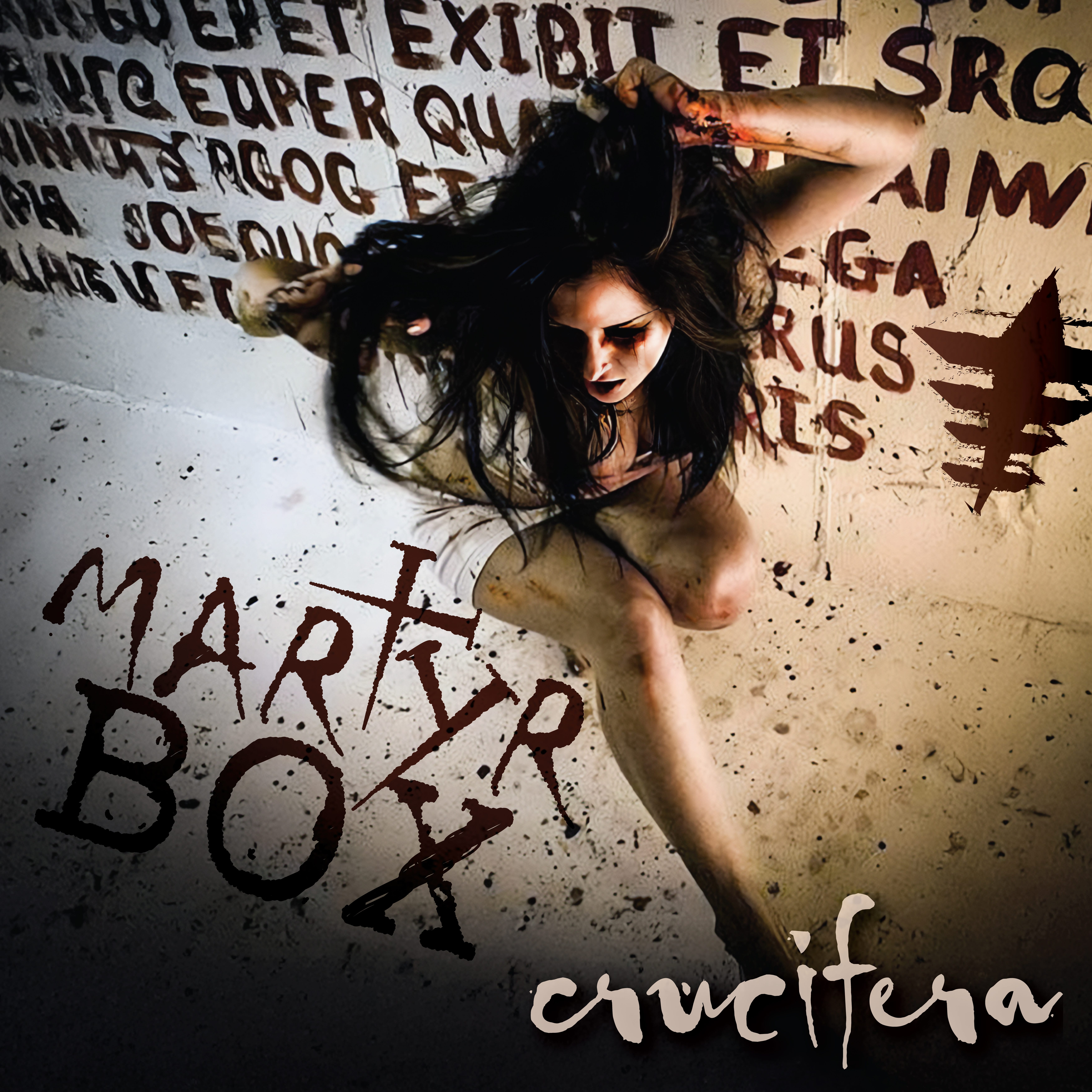
I love collaborating. The music scene should be a community, not a place for cult-of-personality frontmen to strut their bullshit on social media. We need more and more of that supportive mentality. While my composition is solo, my journey in learning the technical side of executing Exostential was heavily fueled by the mentorship of industrial pioneers. Sebastian Komor (Icon of Coil, Komor Kommando, Kommunion, Zombie Girl) did the mastering for my debut album, and Steven Seibold (Hate Dept., Pigface) perfected my own mix of my first single Martyr Box while continually mentoring and encouraging me to get my music out there.
Beyond that, and in spite of what is supposedly “cancel culture” that true artists who can calcify a spine do not actually care about whatsoever, I have been in discussions with quite a few musicians I’ll be collaborating with, and I actually just wrote a piano piece for a popular Metropolis act who has been around quite a long time, and released a new album last month - the track is done, but that will be announced later!
I will also be doing several upcoming remixes. My first was for my friend Brian Graupner’s project Serpadeuce, where I remixed the track Soros. Remixes are coming soon for Komor Kommando, Experiment Haywire (that means you), Wynardtage, and more.
RH:
Speaking of my own musical project, I remember having had some political drama with a few bands from way back when. Their fans were protesting neofolk acts like Death in June while hazing me for being a woman who was new to the scene as a musical artist. I got painted as some leftist crusader for taking a stand and pointing out the hypocrisy of it all and. Later on, the main music producer I had drama with ended up being cool and remixing one of my tracks. The drama was now long gone.
Yet years later in my career, some of those same bands turned out to be part of the social justice mob. They came after me for appearing on Richard Spencer’s show to discuss corruption in Silicon Valley, even though I clearly didn’t endorse his views. They thought me authoring The New Art Right made me an evil Nazi when I was writing to represent individuality. Do you think a mob is always just a mob, whether it’s left or right? Is it the plague of groupthink? The alternative scene is supposed to be about individuality. This all seems so backwards. What happened to individuality?
DA:
A mob is absolutely always a mob. It’s the ultimate plague of groupthink. Individuality vanished because people became terrified of being ostracized, so they allowed self-appointed gatekeepers to dictate whom they could talk to and what nuanced thoughts they could express. These very same people, in the 90s and early 2000s, had a different name: “bullies.” Now, beneath the guise of “politics,” they weaponize a reason to not only destroy you but get celebrated for it.
The alternative scene is supposed to be about protecting the weirdos. Instead, certain veterans have built empires on the aesthetics of rebellion, while simultaneously wielding their platforms to caricature any actual resistance as bigotry. If you speak to the “wrong” person to have a nuanced discussion, you get labeled a Nazi by people who lack the mental bandwidth to understand gray areas. Everyone deserves to be left the fuck alone. If you are imposing your will or judgment upon others, you are the fascist.
RH:
I’ve noticed some cool new developments that have come out of Goths Against Cancel Culture. For example, Ligerhawk Records with Gasoline Invertebrate and my old electro-industrial favorite Xentrifuge are carrying on the torch for freedom of expression and real alternative culture. Bitman produced an entire album to fight against social media witch hunts. The production is fantastic and the lyrics are deeply raw and honest. It’s great to be witnessing this moment and getting back to the music, which is what this was always truly about. How do you see the future of the scene?
DA:
I believe the future of the scene relies exclusively and foundationally on undoing the stranglehold of cancel culture. The declining demand for live events isn’t because fans don’t like the music anymore; it’s because the environment has become too judgmental, hypocritical, narcissistic, and annoying. It’s also because talented musicians are being chased away from expressing themselves, and because they never signed up for walking on eggshells when it came to writing lyrics or creating art.
So many Gen X and Millennial scene veterans just stopped showing up because they didn’t want to deal with the performative drama. Promoters and venue owners become scared at the decline and complied with the few who tried to dictate the narrative, yet they don’t realize these trolls were the reason for said decline to begin with. Younger kids are not into this gatekeeping, judgmental culture. In fact, most of them refuse to even use social media. They are chasing them away as well, all because a few bitter middle-aged people aren’t getting enough attention on the internet anymore.
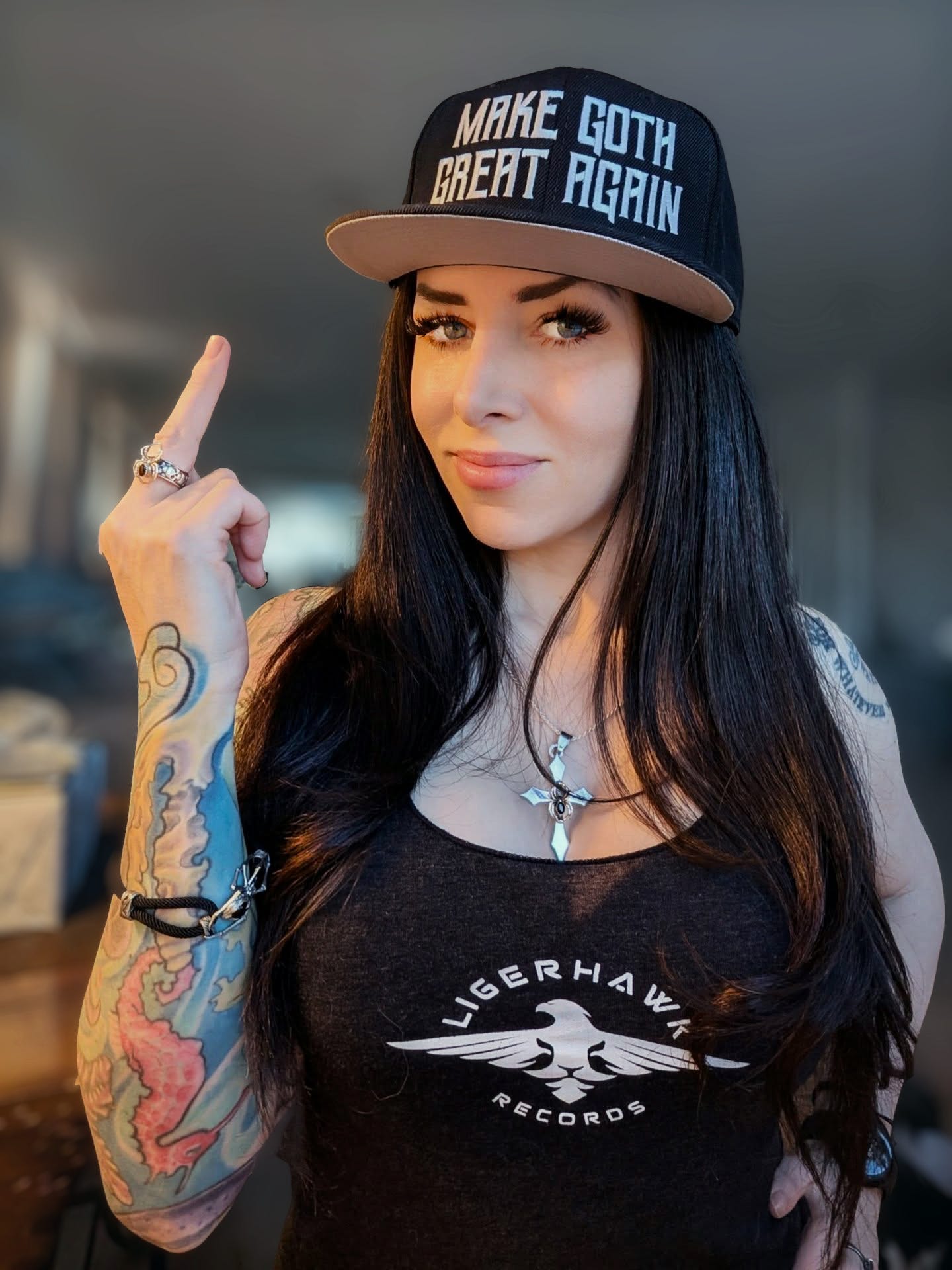
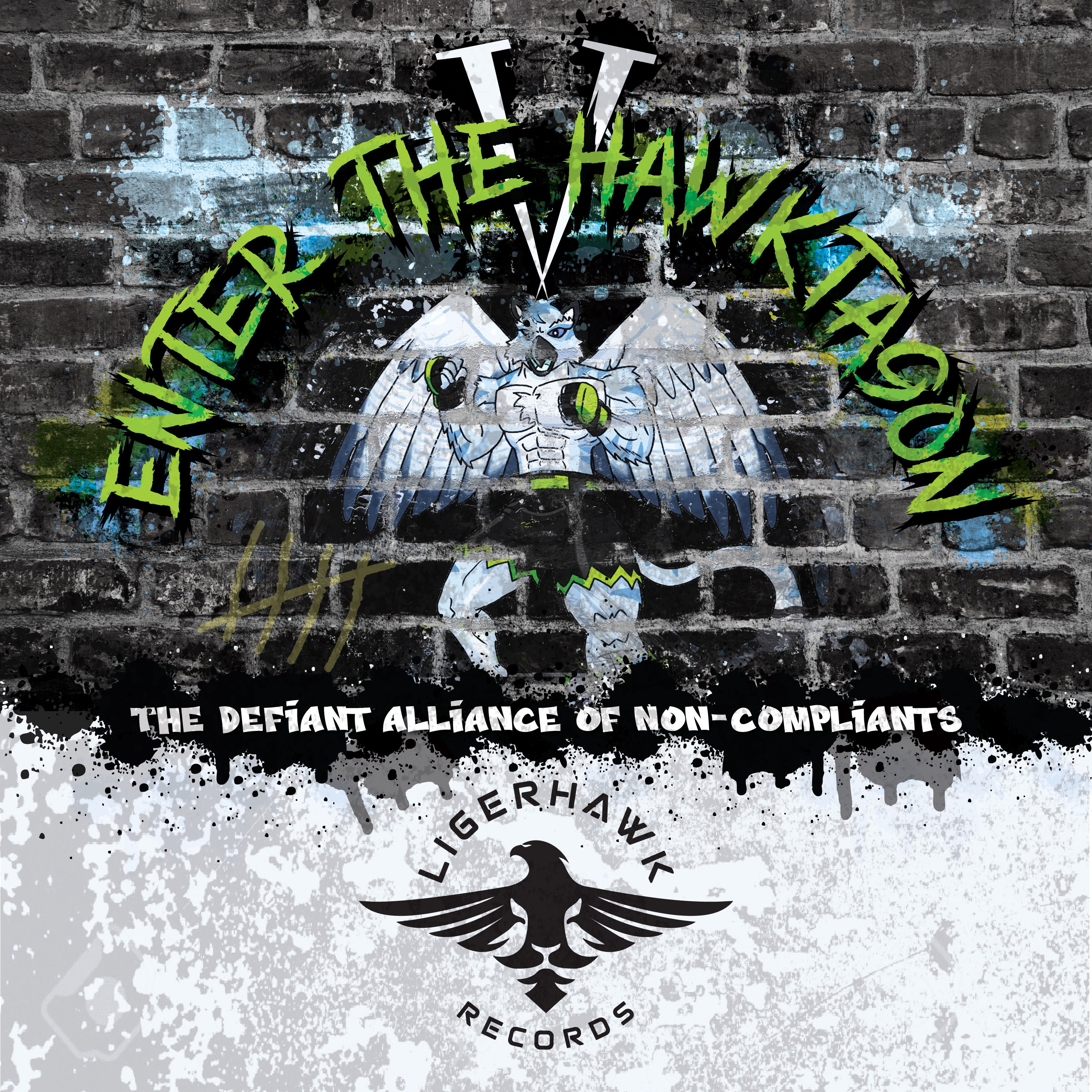
Regarding Ligerhawk, what Brian did is a very nice thing that completely defies the norms of all music labels. It’s really a coalition of artists who support one another. We all release our music independently, but we support one another because we want to, not because we have to or because we stand to gain anything. There is a lot of camaraderie, and it serves as a support network. I got involved and helped Brian with the rebranding/logo design, album art, and even a little bit of merch design for Ligerhawk and Gasoline Invertebrate. A couple of artists have even been dropping labels like Metropolis and Cleopatra to join, us just to wave a middle finger at the current state of affairs. It’s pretty amazing.
That is also why we are looking into launching Problematik events alongside GACC. We’re creating mature, peaceful platforms where art is judged on merit, not on whether an artist passed an ideological purity test. The silent supporters and veterans of our beautiful music scene are returning. We’re seeing real streaming boosts for supported artists, and loyal fans are eager to come out again to events. We have promoters who refuse to cower to random trolls and stand up for the artists we love. The future is bringing the crowd back peacefully, profitably, and purely for the love of the music.
RH:
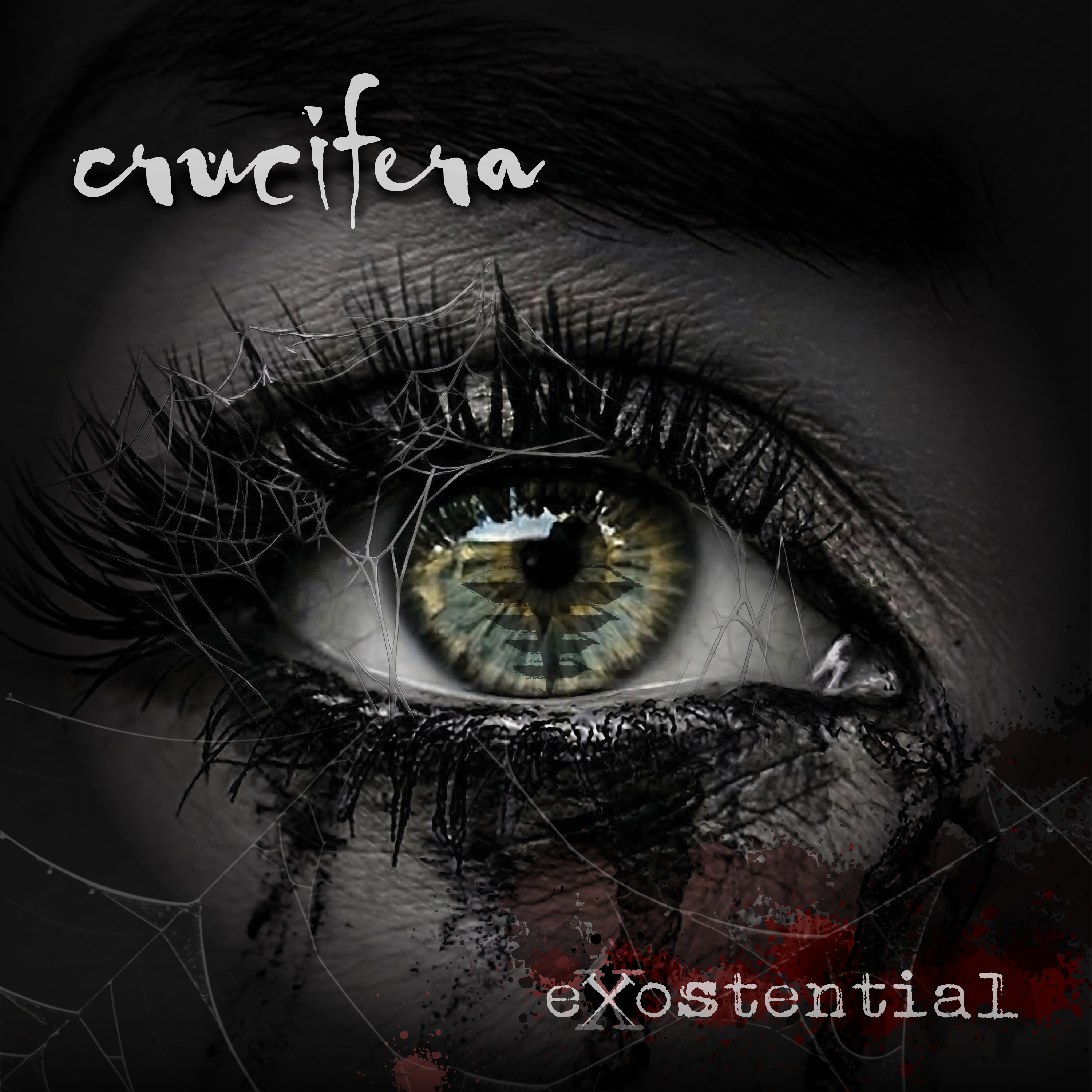
Finally, I listened to a preview track of your upcoming album Exostential which is set to be released on April 3rd. It was dark, enchanting, harsh, and beautiful all at once. I’m excited that this type of music is making a comeback. Where can people check out your music and how can they purchase your new album?
DA:
Thank you so much, Rachel. That truly means the world to me, especially since I consider you a talented ‘girldustrial’ artist as well. Creating this album was my way of reaching past the illusions of this world and peeling back down to the true resonance behind everything. I was not exactly aiming for anything in particular. It just came out the way it did, and I love genre-bending! It’s an awesome soundtrack to deprogram ourselves from the manufactured societal divide, let go of the performative outrage, and get back to the music.

If you like what I’m doing here at The Cultural Futurist, don’t forget to buy me a coffee.

Rachel, thank you so much again. You are a phenomenal interviewer and I love your content. Looking forward to working together on some great things. 😊🖤
Awesome interview. I wasn't aware of Goths Against Cancel Culture but I'm so glad to know it exists. My wife is an ex(?)-goth from the Philadelphia scene and has felt despondent at the thought that her favorite subculture had drifted into cancel culture and identity politics. Good to know there is pushback.