
The Ouroboros of Influence
When you become the culture you’re critiquing

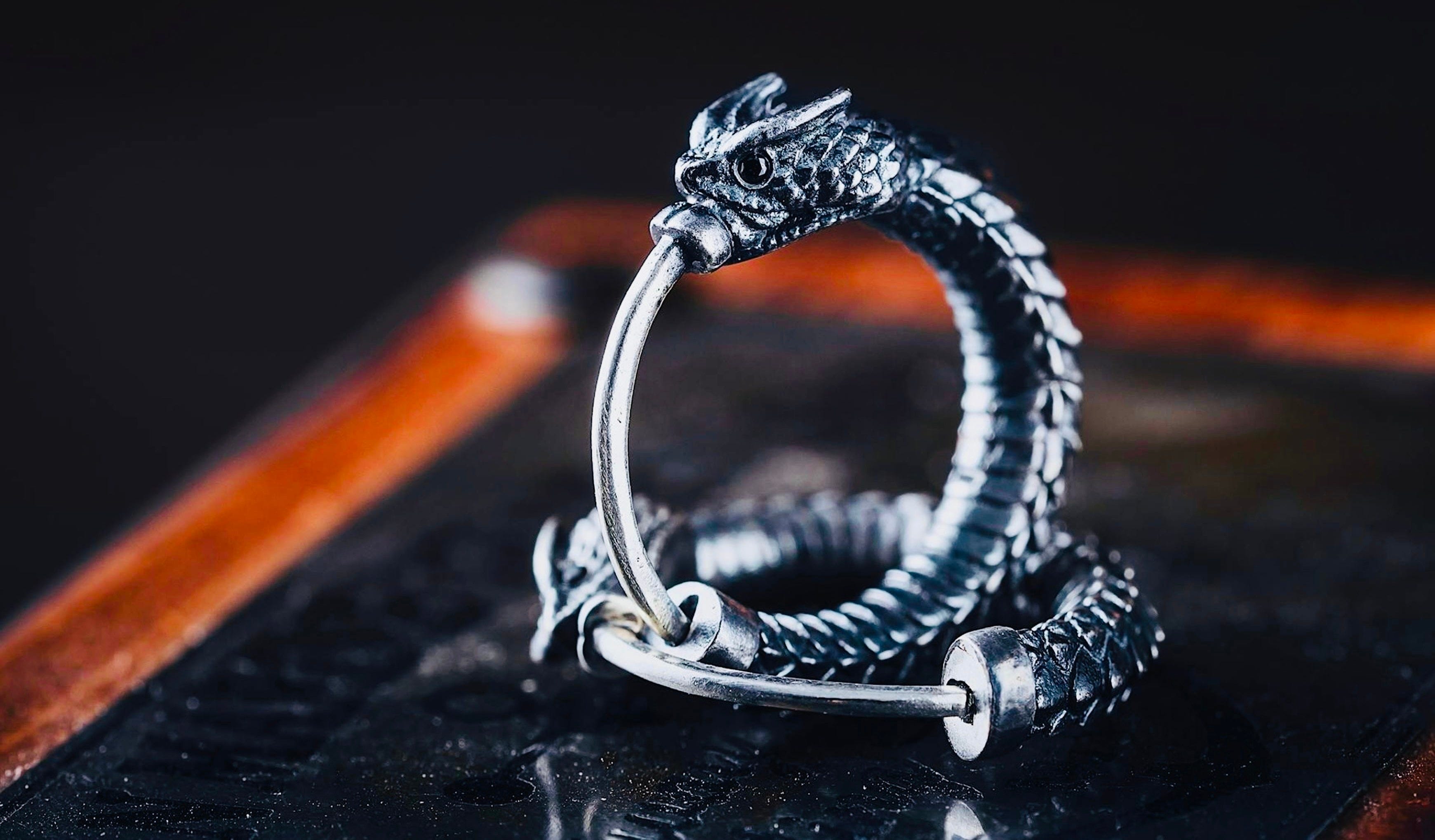
When you’ve been in the discourse long enough you start noticing patterns. It’s not only that you notice patterns in the culture but that you notice patterns in yourself. There will be a point in time when you’ll reach a certain moment, and in this moment that you’ll realize that the very thing you’re railing against is the same thing you dreamed up ten years ago.
Welcome to The Ouroboros of Influence
Lately I’ve been having this creeping sensation that I’m standing in a hall of mirrors, except that every reflection is just me from a different era, and that they’re all pointing at each other accusingly. I spent years advocating for a certain kind of aesthetic extremity. The merging of high fashion and transgression. The idea that beauty and danger should coexist in the same frame. I wrote manifestos. I threw parties. I cultivated entire scenes.
Now I see it everywhere. It’s diluted, debased, and castrated. My first instinct is always disgust. Well, here’s the joke the universe played on me: I helped cause it.
Not directly, maybe. I’m not sitting in a boardroom at some advertising company deciding to appropriate underground aesthetics for mass consumption. Yet influence doesn’t always work that way. Influence is a virus. You release it into the ecosystem and it mutates, spreads, and evolves into forms you never intended. You’re patient zero for a plague that you later catch yourself.
This is especially true for anyone who was involved in what I’ll generously call the “alternative internet” of the 2000s and early 2010s. We thought we were building something different. A new kind of discourse. A new mode of expression. A new way of being transgressive in a culture that desperately needed transgression.
So what happened? That energy got absorbed. Processed. Regurgitated as “disruptive” startup culture, “edgy” marketing campaigns, and the general vibe of irony-poisoned nihilism that now permeates everything.
So yes, the language I helped popularize shows up in places I never expected. The ideas I championed became weapons wielded by people who didn’t understand them. Or worse yet, these people understood them perfectly well and used them for purposes I find repellent. The joke is that some of these purposes were my own, filtered through time and iteration until I no longer recognized myself as the source.
There’s a certain kind of intellectual who never has to face this. They work in academia or some other sealed off environment where their ideas stay theoretical. They critique without consequence because their critique never touches the machinery of culture. They stay outside of the system they’re observing.
Yet the rest of us who actually build things, throw events, publish journals, create communities, and host salons don’t get this type of distance from the behemoth. We have to confront the Frankenstein problem. The monster we’ve created is wandering the countryside, and the villagers are right to be upset, but we also kind of forgot that we created it.
This isn’t a confession and this isn’t an apology. It’s a field report from someone who has been doing this long enough to see the wheel turn.
Here’s what I’ve learned.
Influence isn’t a Monument
You don’t build a statue of your ideas and point to it proudly. Instead, your ideas dissolve into groundwater and show up in unexpected places, coloring things you’ll later encounter without recognizing the taste.
That aesthetic you find derivative? Well, check your own archives from 2016. That discourse you find tedious? Listen for the echoes of arguments you made when you thought you were the only one making them. That movement you find embarrassing? Go ahead and feel around for your fingerprints of its earliest iterations.
This is the Ouroboros of Influence. You swallow your own tail and become the thing you were pushing against, not because you changed, but because you succeeded in ways you didn’t anticipate. The question isn’t whether you’ve shaped more than you remember. If you’ve been active in cultural production for any significant length of time, you have. The question is what you do with that knowledge.
Option A: Denial
Pretend you were never there. Act like the current landscape has nothing to do with you. This is cowardly and probably impossible if anyone has access to your digital footprint.
Option B: Ownership as Brand
Lean into it. Claim credit for everything. “Well, actually, I was doing that in 2012.” This is even worse than denial because at least denial has shame.
Option C: The Middle Path
Accept that you’re implicated. Accept that your ideas mutated in ways you didn’t control and don’t fully endorse. Accept that you’re now critiquing from within the thing you helped create, not from some imagined outside.
This is the only honest position. It’s also the hardest.
I’m not going to tell you I’ve figured everything out. This is simply what I’ve learned. Every day I see something in the culture that bothers me I have to do the internal archaeology:
Was I there?
Did I contribute?
Is this somehow my fault?
Sometimes the answer is no, and I can critique freely. Sometimes the answer is yes, and I have to sit with that before can I open my mouth. Most of the time the answer is “it’s complicated,” which is the answer to most interesting questions. It’s also the most unsatisfying.
What I know to be true is that the people who pretend they have no culpability in the world they’re criticizing are lying. Either they’ve never actually influenced anything (in which case, why should we listen to them?) or they’re engaged in a fantasy of purity that doesn’t exist for anyone who has actually has.
Those of us who made moves and took risks have to live with the consequences of our influence. This sometimes includes the consequence of becoming unrecognizable to ourselves. Some of things I’ve created have mutated into forms I hate, so I’m now critiquing my own cultural offspring. I’ve entered the Ouroboros of Influence. If you have skin in the game you will enter it too.
