
Cultural Startups - The Next Frontier
The problem is that Silicon Valley is boring. The solution is for us to create something better.

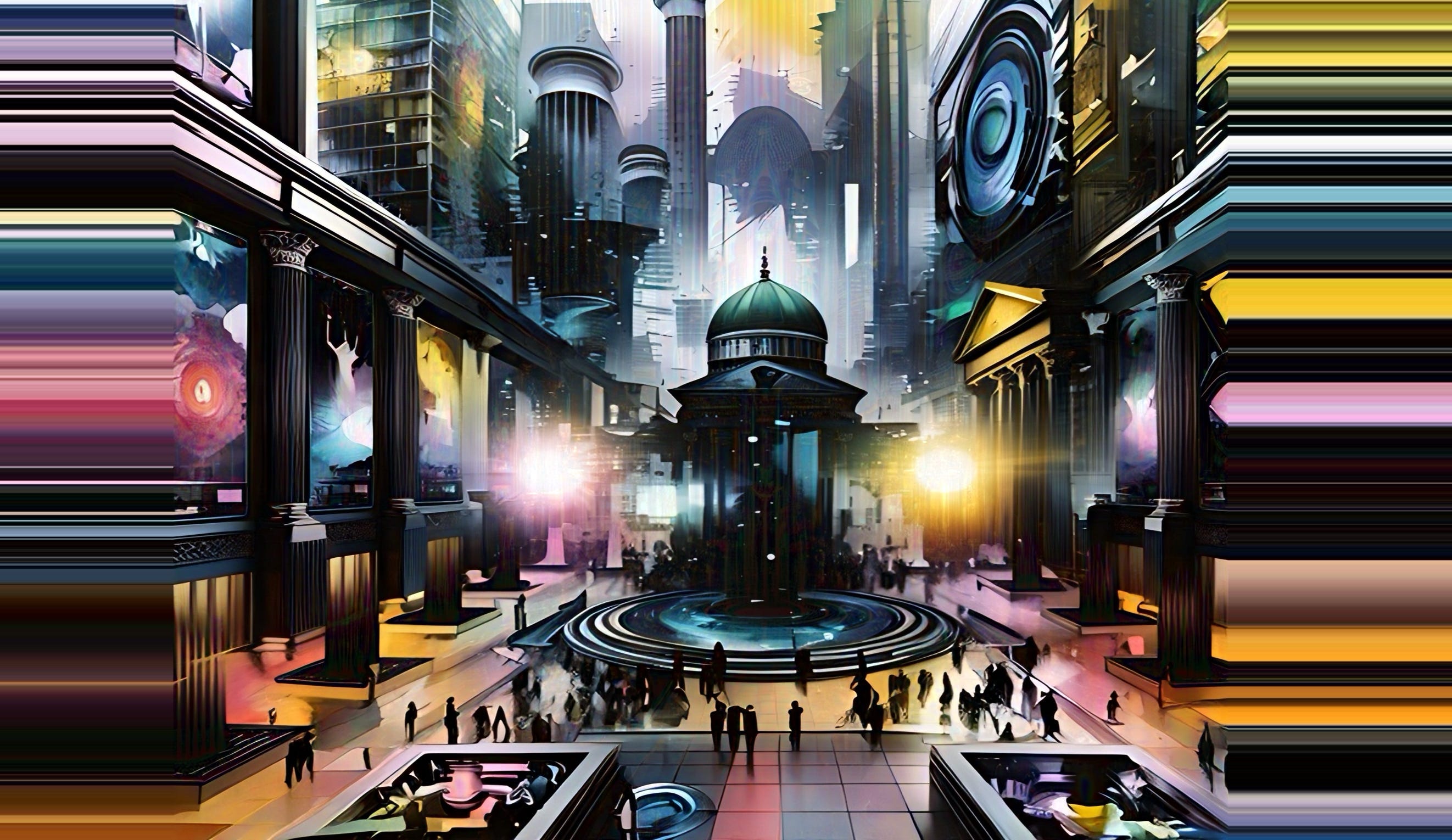
Remember when startups were about building apps and disrupting fallen industries? How quaint. We're about to enter an era where the most exciting ventures aren't about coding, unless we’re talking about coding entirely new cultures. Take a minute and think about the last time a tech company really blew your mind.
I’ll wait.
You’re bored, aren’t you? You’re bored with Silicon Valley. You miss the early days of the Bay Area in which pioneers and visionaries were breaking new ground. You miss the founder parties in which AI philosophers would mingle with creative geniuses focused on reinventing biotech. You miss the days when the blockchain was a cool idea you were discussing with your developer friends. Now the culture has declined and you’re sick of everything related to Silicon Valley.
So, what’s the problem? The problem is that Silicon Valley is boring. The solution is for us to create something better.
Chinese workers already behave like AI with their high-level conformity, yet somehow their ChatGPT overnight project DeepSeek managed to win over many OpenAI users. Today’s entrepreneurs who build products are in competition with monopolies that discard them like trash. These entrepreneurs are headed out the door on a one-way ticket to some shady self-help seminar. The same faction of the same names and the same faces run the same show. It’s all fake, and everyone authentic is done with the charade.
This traditional world of startups have become predictable at best. Another B2B platform, another marketplace app, and another AI tool promising to revolutionize something that doesn’t need revolutionizing. When a startup isn’t predictable it’s so over-the-top it seems like a prank. “Uber for sweatshops” was the latest pitch at Y-Combinator. We’re funding sweatshops in Silicon Valley now, but the efficient kind.
Nevertheless, anyone with good strategic foresight understands how the ways in which we’re accelerating will be defined by a new set of rules. Startups are, and have always been, set for disruption. What better way to create disruption than to disrupt the entire startup ecosystem itself? The political stage has left us with an exciting new market opportunity that we’re already seizing.
Real startups are about culture.
Welcome to the Age of the Cultural Startup
Always look on the fringes if you want to see what comes next. We’re seeing micro-communities spawn their own economies, aesthetics, philosophical frameworks, and nations. These aren't subcultures. They're startup cultures filling a lost void. Look at Praxis Nation. They recently received $525M to build a city based on what they define as heroic beauty. Praxis is cultural startup that only marks the beginning of this changeover.
Cultural startups are poised to create a new ruling class by producing myths for an ascendent elite. These ideas force founders and investors in Silicon Valley to become more innovative if they want to stay in the game. Real disruption is headed our way. Cultural startups will begin to reach critical mass in mid-2026.
So, how do you create a cultural startup? How do you know that a cultural startup will be a worthy investment? What is the anatomy of a cultural startup?
Read on.
The Anatomy of a Cultural Startup
What makes a cultural startup different from a traditional startup is the recognition that the culture itself is the product. The MVP isn't a platform or an app. It's a worldview gaining traction. The network effects aren't about user growth or financial data. They're about memetic proliferation.
Here are some features of cultural startups:
They're antifragile. Traditional startups can be killed by market shifts or tech changes. Cultural startups thrive on chaos and opposition. Each struggle makes each cultural startup more resilient on a memetic level. Cultural startups are generational projects that become more powerful with every thrust of competition. They are Nietzschean in essence.
They're infinitely scalable. You can copy code but you can't copy culture. Once a cultural startup hits critical mass, it shifts the zeitgeist in a way that affects the life of your family, friends, and neighbors. Culture is able to scale in a way that products cannot. Culture is always rising. Therefore, investing in culture is investing in civilization.
They create a third space. Many of us have been longing for a third space and seeking an end to the loneliness epidemic. That is where cultural startups come in. Whether they are a creative network state, bold new fashion institution, literary speakeasy, or some combination of all these things—they fill a lost void and bring people together IRL. Cultural startups are the third space we’ve all been waiting for.
How to Create a Cultural Startup
You may find a lot of this thought-provoking, but you also may have some doubts as to the rational execution of the whole thing. I’m going to tell you how to create a cultural startup because the process isn’t as complicated as you may think.